
Fake Scannable Australian Drivers Licence & Australian ID
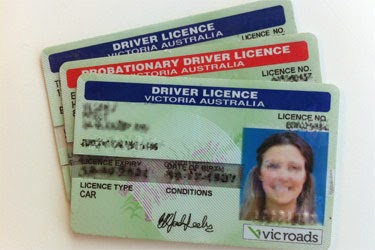
AUSTRALIAN ID and DRIVER LICENCE
1) Australian Capital Territory driver licence
2) New South Wales driver licence
5) Western Australia driver licence
6) South Australia driver licence
7) Tasmania driver licence
8) Northern Territory driver licence
Fake ID Services |
Australian Driver Licence
| Fake Scannable License
Australia doesn’t have a single national driver licence — licensing is administered by each state and territory, so you apply to the authority where you live. But a National Driver Licensing Scheme implemented in 1997 established one classification structure, one set of eligibility criteria and uniform requirements for key transactions, and every Australian jurisdiction has adopted it. The practical upshot: your licence class means the same thing everywhere, and you can transfer between states without retesting.
How Australian Licensing Actually Works
The system is federated but harmonised. Eight jurisdictions issue licences:
- New South Wales — Transport for NSW
- Victoria — VicRoads
- Queensland — Transport and Main Roads
- Western Australia — Department of Transport
- South Australia — Service SA
- Tasmania — Service Tasmania
- Australian Capital Territory — Access Canberra (Road Transport Authority)
- Northern Territory — Motor Vehicle Registry
Because the National Driver Licensing Scheme was adopted across all of them, licence classes are the same in every state and territory, and mutual recognition means a valid licence from one jurisdiction is accepted in the others.
What does differ significantly is the graduated licensing system — learner ages, supervised hours and holding periods vary widely. That’s where most of the confusion arises.
Australian Licence Classes
| Class | Type | What You Can Drive |
|---|---|---|
| C | Car | Vehicles up to 4.5 tonnes GVM seating up to 12 adults including the driver — cars, utes, vans, some light trucks, car-based motor tricycles, tractors and implements such as road graders. Can tow a single trailer up to 9 tonnes GVM, to a maximum combined mass of 13.5 tonnes GCM |
| R | Rider | Any registrable motorcycle, scooter or motor tricycle |
| LR | Light Rigid | Rigid vehicles over 4.5 tonnes but not more than 8 tonnes GVM; vehicles up to 8 tonnes seating more than 12 adults including the driver. Can tow a trailer up to 9 tonnes GVM |
| MR | Medium Rigid | Rigid vehicles with 2 axles and a GVM over 8 tonnes. Can tow a trailer up to 9 tonnes GVM |
| HR | Heavy Rigid | Rigid vehicles with 3 or more axles and a GVM over 8 tonnes, including articulated buses. Can tow a trailer up to 9 tonnes GVM |
| HC | Heavy Combination | A prime mover with a single semi-trailer plus a dolly, or a rigid vehicle towing a trailer over 9 tonnes GVM plus an unladen converter dolly |
| MC | Multi-Combination | The highest class — any vehicle or combination other than a motorcycle |
Two things to note about the heavy ladder. Classes are hierarchical, so holding a higher class covers the lower ones. And to upgrade to any heavy class, you must first have held a car (class C) licence for at least 12 months — you can’t go straight to a truck licence.
Driving passengers for payment: regardless of licence class, you must also hold a Bus Driver Authority to drive passengers for a fare or other form of payment.
One class C restriction worth knowing: class C holders must not carry passengers aged under 16 in a car-based motor tricycle.
The Standard Graduated Licensing Framework
All Australian jurisdictions have a graduated licensing system for novice drivers, and all of them meet or exceed the national policy baseline. That baseline sets out:
- Learner permit at 16 years with supervised driving required
- 12 months minimum holding of the learner permit
- At least 50 hours of supervised driving recorded in a logbook
- A practical on-road test to achieve a solo unsupervised licence
- A Hazard Perception Test as part of the process
An unrestricted licence holder — someone who has fully developed and practised their skills, usually over a two-to-three year period — is considered competent to drive with minimum restrictions and may supervise learner drivers.
Learner Licence Requirements by State and Territory
This is where Australia diverges most. Night hours are counted inside the total, not added on top.
| Jurisdiction | Total Hours (under 25) | Night Hours | Minimum L Hold |
|---|---|---|---|
| New South Wales | 120 | 20 | 12 months |
| Victoria | 120 (under 21) | 20 | 12 months |
| Queensland | 100 | 10 | 12 months |
| ACT | 100 | 10 | 12 months |
| Tasmania | 80 | 15 | 12 months |
| South Australia | 75 | 15 | 12 months |
| Western Australia | 50 | 5 | 6 months |
| Northern Territory | None logged | — | 6 months |
New South Wales and Victoria set the highest bar at 120 hours with 20 at night — more than twice what Western Australia requires. The Northern Territory sets no mandatory logged hours at all, though it recommends around 100.
Age exemptions matter. Several jurisdictions waive or reduce logbook hours for older learners:
- NSW — over 25 exempt from logged hours
- Victoria — over 21 exempt from logged hours, with shorter holding periods for older learners
- Queensland — over 25 exempt from logged hours
- WA — over 25 exempt, though the 6-month hold still applies
- ACT — 25 or older need 50 hours including 5 at night
- SA — 25 or older need a 6-month hold rather than 12
The instructor bonus. In NSW, Queensland and the ACT, one hour with a professional instructor counts as three hours in the logbook, capped at 30 hours. In Tasmania, one hour with a professional instructor counts as two hours, capped at 20 hours.
Victorian nuance: the learner permit can be applied for from 15 years and 11 months, but is only issued as you turn 16. Learners under 21 need 120 hours and a 12-month hold. No driving test is required until 18.
Minimum Ages and Time to a Full Licence
| Jurisdiction | Learner | P1 | Time on Provisional | Minimum to Full Licence |
|---|---|---|---|---|
| Victoria | 16 | 18 | 48 months | 5 years |
| New South Wales | 16 | 17 | 36 months | 4 years |
| Queensland | 16 | 17 | 36 months | 4 years |
| South Australia | 16 | 17 | 36 months | 4 years |
| Tasmania | 16 | 17 | 36 months | 4 years |
| ACT | 15 years 9 months | 17 | 36 months | 4 years |
| Western Australia | 16 | 17 | 24 months | 2.5 years |
| Northern Territory | 16 | 16 | 24 months | 2.5 years |
Victoria is the slowest pathway in the country — five years minimum from learner to full licence, because of the 48-month probationary period. WA and the NT are the fastest at about two and a half years.
Queensland specifics: learner eligible at 16, P1 at 17, open licence at 20, with 100 hours of supervised driving required if you’re under 25.
A change to watch in Western Australia: the state announced in April 2026 that its learner requirements will rise from 50 hours to 80 hours (10 at night) and the holding period from 6 to 12 months. Check Transport WA for the commencement date before planning around the old numbers.
L Plate Rules and Restrictions
Rules on speed limits and plate display vary by jurisdiction:
| Jurisdiction | Maximum Speed | Minimum Hold Before P Plates |
|---|---|---|
| New South Wales | 90 km/h | 52 weeks |
| Victoria | Posted limit | 52 weeks (under 21) |
| ACT | Posted limit | 52 weeks |
| Queensland | 100 km/h | 52 weeks |
| Tasmania | 90 km/h | 52 weeks |
| South Australia | 100 km/h | 52 weeks |
| Western Australia | 100 km/h | 26 weeks |
| Northern Territory | 100 km/h | 26 weeks |
NSW and Tasmania impose a 90 km/h learner cap — even where the posted limit is higher. Everywhere else, learners may drive to the posted limit.
Display requirements are consistent: L plates must be displayed at the front and rear of the vehicle, correctly sized and coloured, and must not obstruct the driver’s or supervisor’s vision or obscure the number plates. It’s an offence to display the wrong letter or colour plates.
Blood Alcohol Limits
Australia takes a hard line with novice drivers, and zero BAC applies to learners and provisional holders in every jurisdiction.
- Northern Territory — zero BAC for unlicensed and learner drivers, provisional licence holders, and drivers under 25 with less than three years’ experience
- Queensland — zero BAC for learner, probationary, provisional and restricted licence holders, RE class holders for the first year, interlock drivers, driver trainers and unlicensed drivers
- South Australia — zero BAC for learner permit holders and provisional and probationary licence holders; unlicensed drivers are also subject to zero BAC
For drivers not in those categories, the general limit is 0.05 BAC. But note the higher-risk professional categories where zero applies regardless of licence type — including drivers of vehicles over 15 tonnes GVM, prime movers, taxis, buses, licensed chauffeured vehicles and vehicles carrying dangerous goods.
Demerit Points by Licence Type
Demerit thresholds are lower for novice drivers, and points can be accrued while driving anywhere in Australia — an offence committed outside your home state can still be applied to your licence.
| Licence Type | Demerit Point Limit (NSW) |
|---|---|
| Unrestricted | 13 points |
| Professional drivers | 14 points |
| Provisional P2 | 7 points |
| Provisional P1 | 4 points |
| Learner | 4 points |
The headline for learners and P1 holders: a four-point limit. That’s roughly one serious speeding offence away from suspension. If you exceed your limit, you’ll receive a Notice of Suspension — or, on applying for a licence, a Notice of Refusal.
Converting an Interstate Licence
Moving between Australian states and territories is straightforward because of mutual recognition. You generally need to:
- Apply to your new jurisdiction’s licensing authority
- Provide proof of identity and proof of residency in the new state or territory
- Surrender your existing licence — the new authority notifies the issuing jurisdiction so it can be cancelled on their register
- Provide a licence history from the issuing state in some circumstances, particularly if your licence is expired or close to expiry
Most jurisdictions require you to transfer within 3 months of becoming a resident, though this varies — confirm with your new authority.
Licence histories expire quickly. In some jurisdictions they’re valid for only 7 calendar days. Queensland licence holders transferring out may need to provide both a licence and a traffic history.
Converting an Overseas Licence
Australia’s approach depends on where your licence was issued and what visa you hold.
Visiting Drivers
In most cases, overseas visitors who don’t hold a permanent visa are treated as visiting drivers and can drive on a valid overseas licence while it remains current.
One national exception stands out: across most states and territories, visiting drivers can drive indefinitely on a current overseas licence. The exceptions are the Northern Territory (3 months), and New South Wales and Victoria (6 months).
Only when you become a permanent resident or Australian citizen are you required to obtain an Australian licence.
In NSW, temporary overseas visitors can drive for up to six months provided they remain a temporary overseas visitor, hold a current overseas licence, haven’t been disqualified or had their visiting privileges withdrawn, and carry their overseas licence. If the licence isn’t in English, you must also carry an English translation or an International Driving Permit.
Time Limits Once You Become a Resident
Once you’re a permanent resident, each state sets its own deadline:
| Jurisdiction | Deadline |
|---|---|
| New South Wales | 3 months from arriving in Australia (temporary visa holders arriving on or after 1 July 2023 intending to live in NSW for more than 6 months must convert within 6 months) |
| Victoria | 6 months from the day you first begin living in Victoria, whatever your visa |
| Queensland | 3 months after you start living there as a citizen or on a permanent or special category visa |
| Western Australia | Up to 3 months for citizens and permanent residents |
| South Australia | Within 3 months of becoming a permanent resident |
| Tasmania | Within 6 months of the date your permanent visa is granted |
| ACT | 3 months for permanent visa holders |
| Northern Territory | Check with the NT Motor Vehicle Registry |
Driving on an overseas licence after your state’s limit counts as driving without a valid licence — even if the overseas licence is still current.
The Recognised Overseas Licences Scheme
If you hold a licence from a recognised jurisdiction, you can convert to an Australian licence without completing training or testing. Identity checks, the licence fee, and eyesight and medical checks still apply.
The long-standing recognised list:
Austria, Belgium, Bosnia and Herzegovina, Canada, Croatia, Denmark, Finland, France, Germany, Greece, Guernsey, Ireland, Isle of Man (licences first issued on or after 1 April 1991), Italy, Japan, Jersey, Luxembourg, Malta (licences first issued on or after 2 January 2004), the Netherlands, New Zealand, Norway, Portugal, Singapore, Spain, Sweden, Switzerland, the United Kingdom and the United States.
Significant expansion underway. Australian licensing authorities have agreed to recognise licences from Bulgaria, the Czech Republic, Estonia, Latvia, Lithuania, Poland, Romania, Serbia, Slovakia, Slovenia, South Korea and Taiwan — announced July 2026. Cyprus and Hungary were added to the scheme in September 2026.
Start dates vary and matter. Recognition is being introduced progressively:
- WA and Queensland — from 31 October 2026
- NT, SA and NSW — from 1 January 2027
- Tasmania — from 1 February 2027
Since start dates vary by jurisdiction, check when the changes take effect in your state or territory before applying — you may be able to convert without testing sooner than you think, or not yet.
Why some countries qualify: recognition is only provided where an overseas jurisdiction satisfies Australia’s assessment requirements, covering road safety performance, driver licensing requirements, licence integrity, and the safety performance of overseas drivers after they transfer.
Translation Requirements
If your overseas licence isn’t in English, you’ll need an official translation — and who can provide it varies:
- New South Wales — only the Department of Home Affairs Free Translating Service or Multicultural NSW, plus driver licence translations from the Consulate-General of the Republic of Korea and the Taipei Economic and Cultural Office in Sydney
- Queensland — an approved NAATI translator
- Victoria — any NAATI accredited translator, or your country’s consulate in Australia
- South Australia — a NAATI approved translator, a consulate office in Australia, or the SA Government Interpreting and Translating Centre
- ACT — an embassy or consulate, the Department of Home Affairs, or a NAATI certified translator
- Western Australia — for driving, a translation certified by your consulate, diplomatic office or mission
Watch your expiry date. An expired overseas licence may not qualify for a no-test transfer, so check your state’s rules before it lapses.
Practical Tips for Learner Drivers in Australia
Pick your jurisdiction’s rules carefully if you’re moving. The difference between 50 hours in WA and 120 in NSW is enormous. If you’re relocating with a learner permit, ask whether time and hours already logged will be recognised — many jurisdictions do credit them.
Log your night hours properly. Every jurisdiction that requires hours also requires night driving, and it’s the category learners most often fall short on. Aim to exceed the minimum rather than hit it exactly.
Use the instructor bonus if it applies. In NSW, Queensland and the ACT, professional instruction hours count triple up to a cap — that’s 30 hours of logbook credit for 10 hours of lessons. In Tasmania, it doubles to a 20-hour cap.
Study the right handbook. Road rules are broadly consistent, but each jurisdiction publishes its own handbook and tests from it. Study the one for the state where you’re testing.
Sit the Hazard Perception Test early. It’s part of the national framework, and in some jurisdictions you can complete it well before your practical test — don’t let it become the thing blocking your booking.
Respect the four-point learner and P1 limit. Demerit points follow you across state borders, and a four-point cap gives very little margin.
Never assume a phone exemption. Learner and provisional drivers face mobile device restrictions in every jurisdiction, generally including hands-free use while the vehicle is moving or stopped but not parked.
Consider the CBT&A or logbook route where offered. Some jurisdictions — the ACT among them — let you complete competency-based assessment with an accredited instructor and skip the government practical test entirely.
Frequently Asked Questions
Is there an Australian national driver licence? No. Licensing is administered by each state and territory, but a National Driver Licensing Scheme adopted by all jurisdictions means licence classes, eligibility criteria and key requirements are uniform.
What are the Australian licence classes? C (car), R (rider/motorcycle), LR (light rigid), MR (medium rigid), HR (heavy rigid), HC (heavy combination) and MC (multi-combination).
What’s the minimum age for a learner licence in Australia? 16 in most jurisdictions. The ACT starts at 15 years and 9 months, and Victoria allows application from 15 years and 11 months but issues at 16.
How many supervised driving hours do I need? It depends where you live: 120 hours with 20 at night in NSW and Victoria, 100 with 10 at night in Queensland and the ACT, 80 with 15 at night in Tasmania, 75 with 15 at night in South Australia, 50 with 5 at night in WA, and none logged in the Northern Territory.
Do older learners need fewer hours? Generally yes. NSW, Victoria and Queensland exempt learners over 25 from logged hours, and the ACT requires 50 hours with 5 at night for those 25 and older. But in WA the 6-month holding period still applies regardless of age.
How long does it take to get a full licence? About 2.5 years minimum in WA and the NT, and about 4 years in NSW, Queensland, SA, Tasmania and the ACT. Victoria is longest at 5 years.
What’s the blood alcohol limit for learner and provisional drivers? Zero, in every Australian jurisdiction.
How many demerit points can a learner or P1 holder accumulate? In NSW, learner and P1 drivers have a 4-point limit — compared with 7 for P2 and 13 for unrestricted licence holders.
Can I drive in Australia on my overseas licence? Yes, if you’re a temporary visitor. Most jurisdictions allow this indefinitely while your licence is current, but the NT limits it to 3 months and NSW and Victoria to 6 months. Once you become a permanent resident, you must convert within your state’s deadline.
Can I convert my overseas licence without taking a test? If it’s from a recognised jurisdiction — which includes Canada, most of Europe, Japan, Singapore, South Korea (from late 2026), Taiwan, the UK and the USA — you can convert without training or testing. Identity, fee and eyesight checks still apply.
Do I need a translation of my overseas licence? If it isn’t in English, yes — and acceptable translators vary by state. NAATI-certified translators are accepted in most, but NSW restricts who qualifies.
Can I transfer my licence between Australian states? Yes. Mutual recognition means you can transfer without retesting, generally within 3 months of becoming a resident, though you’ll need proof of identity and residency and a licence history in some cases.
The Bottom Line
Australia’s licensing system is national in structure and local in detail. Licence classes mean the same thing in every state and territory, and you can move between jurisdictions without retesting — but the graduated pathway varies enormously.