
FAKE SCANNABLE BRITISH COLUMBIA | DRIVER’S LICENSE & BC SERVICES FAKE ID CARD

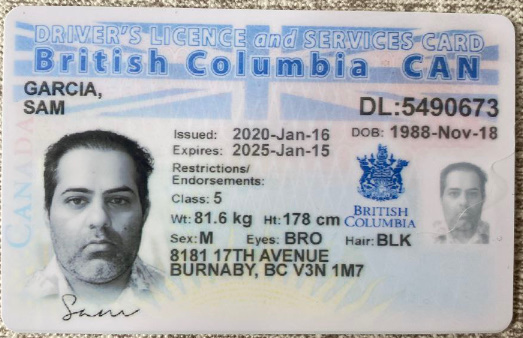
FAKE SCANNABLE BRITISH COLUMBIA DRIVER’S LICENSE & BC ID CARD
Price $150
Fake ID Services | British Columbia Driver’s Licence| Fake Scannable License
British Columbia’s licensing system is administered by ICBC, and it changed significantly on October 19, 2026. The headline: novice drivers with a clean record no longer take a second road test to exit the Graduated Licensing Program, and you must enter the voluntary program at 16 and can exit as a full Class 5 after 24 months of incident-free driving. Here’s how the whole process now works.
What Is a BC Driver’s Licence?
A BC driver’s licence is the credential authorising you to drive specific classes of vehicle on provincial roads. The ordinary passenger licence is Class 5, and for new drivers the pathway runs through the Graduated Licensing Program (GLP) — first a learner’s licence, then a novice licence, then a full licence.
If you drive safely, the whole process takes about three to four years from start to finish. There’s plenty of time to study, practise and take driver training along the way.
The Big Change: No Second Road Test
British Columbia updated its Graduated Licensing Program while maintaining its high safety standards for driver testing and licensing. Drivers with a Class 7 novice or Class 7, 8 novice licence and a clean driving record no longer take a second road test to get a Class 5 licence with restrictions.
Instead, they undergo a Driving Record Assessment, where they must demonstrate safe driving to be eligible to upgrade, followed by a 12-month restriction period. The Driving Record Assessment replaced the second road test as of October 19, 2026.
The rationale is worth noting: nearly all jurisdictions worldwide don’t have a second road test in their graduated licensing program, and Transport Canada collision statistics show that three of the four Canadian provinces with the lowest motor-vehicle fatality rates don’t have an exit test.
The changes also emphasise ongoing monitoring of driving behaviour rather than a single high-stakes test — and drivers who are eligible may qualify for a one-time, automatic licence upgrade from Class 7 to Class 5, meaning they won’t need to complete an in-office driving record assessment at all.
Step 1: Get Your Learner’s Licence (Class 7L)
You can get your L on or after your 16th birthday.
Here’s how:
- If you’re under 18, get a parent or legal guardian to sign consent
- Take the practice knowledge test to boost your confidence and improve your chances of passing the real one
- Take the online knowledge test, or book an appointment to take it at an ICBC driver licensing office
- Pass a vision screening test
A more convenient option arrived on June 9, 2026: the passenger vehicle (Class 5 and 7) and motorcycle (Class 6 and 8) knowledge tests are now available online. This is a meaningful change for people in rural and remote communities who previously had to travel to take the test. Online testing is not available for commercial licences (Classes 1 to 4), which still require an in-person knowledge test.
Online test practicalities:
- You have up to 72 hours after registration to start the test
- You have 45 minutes to complete it in a single session
- The test has 50 multiple-choice questions measuring how well you know the material in the Learn to Drive Smart guide — you need 40 correct to pass
Don’t be caught out by this: passing the knowledge test online does not mean you are licensed or legally allowed to drive. After you pass, you must visit a driver licensing office to get your licence. Depending on the office, you may need to book a 10-minute appointment.
What to bring to the office: primary and secondary identification, a custodial parent or legal guardian if you’re under 18, the fees for the knowledge test and Class 7L licence, and glasses or contact lenses if you need them to drive.
Your learner’s licence is valid for two years. You’ll need to retake the knowledge test if you want to renew it. When you’re issued your licence, you’ll also get an L (Learner) sign and a copy of Tuning up for drivers.
Class 7L Restrictions
You remain subject to these restrictions throughout your learner stage:
- Drive with a qualified supervisor who sits beside you in the front passenger seat. As of October 19, 2026, the minimum age lowered to 22 years old (previously 25). The supervisor must hold a valid Class 1–5 licence without the zero blood alcohol and zero blood drug restriction, and be legally able to drive.
- Only one passenger at a time, not including your supervisor. As of October 19, 2026, you can drive with more than one passenger provided all other passengers are immediate family.
- Display the red L sign on the back of your vehicle
- Zero alcohol or drugs in your blood when you drive
- No cellphones or other electronic devices, including hands-free devices
- No driving between midnight and 5 a.m.
Immediate family means parents, children, spouse, brothers, sisters and grandparents — including step and foster relationships.
A detail that trips people up: the supervisor must occupy the required seating position, remain awake, and be legally able to operate the vehicle. A supervisor who is subject to a zero-tolerance period as a new Class 5 graduate or a new resident Class 5 holder cannot supervise until that period has ended.
One grandfathering rule: for a Class 5L licence issued before October 19, 2026, the accompanying supervisor must be at least 19 years old. For a Class 5L licence issued on or after that date, the supervisor must be at least 22.
How Long Must You Hold Your Learner’s Licence?
The minimum learner driving experience required before you can take the Class 7 road test now depends on your age:
| Your Age | Minimum Learner Driving Experience |
|---|---|
| Under 25 | 1 year (12 months) |
| 25 or older | 9 months |
Note for motorcyclists: a Class 8L motorcycle learner must accumulate one year of learner driving experience before becoming eligible for the Class 8 road test, regardless of age.
Step 2: Get Your Novice Licence (Class 7)
After at least one year of practice with a qualified supervisor — or nine months if you’re 25 or older — you can take your first road test.
1 year with supervisor + Class 7 road test = N
To get your N, book, take and pass the Class 7 road test.
Booking: you can book, reschedule or cancel your Class 5, 6, 7 or 8 road test appointment or motorcycle skills test online. The earliest date you can take the test is listed on your licence. Book well in advance, as offices get busy — especially during spring and summer. New appointments on earlier dates appear as people cancel, and calling to book won’t reveal different times than booking online.
If you’re driving on a non-BC licence and have passed your knowledge test but haven’t been issued a learner driver licence, contact the driver licensing information line to book your road test.
Step 3: Get Your Class 5 Licence With Restrictions
You can apply for a Class 5 licence with restrictions after holding your N for at least:
- 24 months of safe driving if you’re under 25 — reduced to 18 months if you completed an approved GLP course during the learner phase
- 12 months of safe driving if you’re 25 or older
You must have no prohibitions and no convictions for excessive speed or use of electronic devices during that time.
On the GLP course reduction: if you take but do not complete an approved GLP course, you’ll still need the full 24 months.
The Driving Record Assessment
To get your Class 5 licence, you must pass the Driving Record Assessment. You can find your eligibility date on your driving record — as of October 19, 2026, it’s listed as the “Earliest Exit Date.”
Once you’ve reached that date, visit your nearest driver licensing office, either by appointment or as a walk-in customer. Book online at an ICBC driver licensing office — not a Service BC location or driver licensing agent — and select the “Driving Record Assessment” service type.
You have a choice on cost:
- Upgrade your existing licence as soon as you’re eligible for $17
- Wait until closer to your licence’s expiry date and upgrade to a new licence valid for five years for $75
Payment is accepted by cash, Visa, Mastercard, American Express, debit cards and personal cheques.
The 12-Month Restriction Period
Your Class 5 licence will carry a new restriction — restriction 55 — requiring zero blood alcohol and zero blood drug content while driving. It expires after 12 months.
If you get a prohibition or suspension before that date, the 12-month restriction period restarts from the date your licence is reinstated.
During this restricted period, drivers are subject to a zero blood-alcohol and drug restriction and face greater scrutiny than experienced drivers if they receive any violations on their record.
After 12 months of safe driving, the restriction lifts automatically — no card replacement is needed.
Optional: Getting a Physical Class 5 Card
You can replace your licence if you want a physical card showing your Class 5 licence. This step is optional, and your driving record will always display your current licence class. Visit a driver licensing office with the $17 replacement fee, and you’ll be issued a Class 5 licence with the same expiry date as the licence you replaced.
The Full Pathway at a Glance
For drivers under 25:
| Stage | Requirement |
|---|---|
| Learner | 12 months, supervisor aged 22+, zero BAC/BDC, no devices, L sign, 1 passenger, no driving midnight–5 a.m. |
| Class 7 road test | Pass to get your N |
| Novice | 24 months safe driving — or 18 months with an approved GLP course |
| Driving Record Assessment | Pass to get Class 5 |
| Class 5 with restriction 55 | 12 months of zero BAC/BDC |
For drivers 25 and older:
| Stage | Requirement |
|---|---|
| Learner | 9 months |
| Class 7 road test | Pass to get your Class 7 |
| Novice | 12 months |
| Driving Record Assessment | Pass to get Class 5 |
| Class 5 with restriction 55 | 12 months of zero BAC/BDC |
BC Licence Classes
BC uses a numbered class system, and higher classes generally cover lower ones:
| Class | Covers |
|---|---|
| 1 | Semi-trailer trucks and heavy combinations |
| 2 | Buses with over 24 passengers |
| 3 | Trucks with more than two axles and heavy combinations without a semi-trailer |
| 4 | Ambulances, emergency vehicles and buses up to 24 passengers |
| 5 | Passenger cars and light trucks — the ordinary licence |
| 6 | Motorcycles |
| 7 | Novice licence (under the GLP) |
| 8 | Learner and novice licences for motorcycles |
Note on class combinations: if you hold both a Class 5 and Class 6, they appear as “5, 6” on your licence. Upgrading from a Class 7 or 7, 8 licence can take you to a Class 5 or 5, 6 licence.
Identity and Residency Requirements
You need to show accepted ID each time you visit a driver licensing office — one primary and one secondary document, so two pieces in total.
Two important rules:
- Each document must be an original or a true copy certified by the issuing government agency — photocopies aren’t accepted
- You can use most immigration documents issued by the Government of Canada as your primary identification to obtain a BC driver’s licence and/or BC Services Card, along with your secondary identification
Accepted document notes:
- A BC driver’s licence and Services Card (combined) must include your name, picture and signature, is accepted up to three years after the expiry date, and can only be used as one piece of identification
- A BCID card is accepted up to three years after expiry, but older BCID cards without an expiry date aren’t accepted, and it’s not accepted as primary identification if you last used a study, work, visitor or temporary-resident permit to obtain it
- A photo BC Services Card must include your name, picture and signature, and is accepted up to three years after expiry
ICBC provides an online tool that asks a few quick questions to confirm exactly which ID you need.
The BC Services Card
The BC Services Card is British Columbia’s single card for multiple purposes. You can use it to:
- Access health services
- Set up a BC Services Card Account to log in to websites that accept BC Services Card Login — the fastest way to set up an account is with the card itself
- Use as photo ID to verify your identity or age, such as when opening a bank account
To get a photo BC Services Card, find a driver licensing office — you may be able to book an appointment online or by phone, or check walk-in hours. They’ll confirm you’re a BC resident and take your photo. Bring two acceptable pieces of ID, plus your BC Services Card or CareCard if you have one.
One thing to check first: if you have a BC Services Card or still have a CareCard, make sure the name on that card exactly matches the name on your driver’s licence. If not, call Health Insurance BC before you go.
Moving to BC With an Existing Licence
After moving to British Columbia, you have 90 days to switch over your licence. You can drive with your existing, valid licence in the meantime.
The 90-day rule does not apply — and you may continue driving on your current licence — if you:
- Are visiting as a tourist for up to six months
- Have a valid student exemption due to full-time enrolment at a designated educational institution in BC
- Are ordinarily resident outside of BC
- Are a temporary foreign worker with a federal work permit designating you in the Seasonal Agricultural Worker Program (SAWP) — SAWP workers may drive for up to 12 months on a valid licence from their home jurisdiction. Staying longer than 12 months under SAWP and wanting to keep driving means you’ll need a BC driver’s licence.
Moving From Within Canada
Book an appointment to apply at an ICBC driver licensing office and bring:
- Accepted ID
- Your current driver’s licence
- Licence fees
- Proof of driving experience
A relevant change for new BC residents: you’re now only required to provide your driver licence history — proof of insurance is no longer required. However, your premiums will be adjusted for the first three years of driving in BC due to the increased risks associated with driving in a new area. Each year you remain crash-free, your discount increases.
Moving From Outside Canada
Driver licensing requirements depend on where your current licence is from:
- Licence exchange jurisdictions — you can exchange your current licence for a BC licence without additional testing
- Other jurisdictions — you can still apply, but you’ll need to take a knowledge and road test
You must surrender any driver’s licence(s) you have when you apply, so ICBC can determine your driving experience and which licence class you’re eligible to test for. You can only legally hold one driver’s licence in British Columbia.
New residents who hold a Canadian, American, Australian, Austrian, Dutch, French, German, Japanese, New Zealand, South Korean, Swiss or United Kingdom licence can usually complete their licence exchange the same day.
If your licence isn’t in English, you’ll need to provide a translation by an approved translator.
Renewing Your Licence or ID
To renew your driver’s licence or BCID, bring two pieces of accepted ID to any driver licensing office up to six months (180 days) before your licence expires.
Appointments are recommended for licence renewals and replacements, as well as BC Services Card and BCID applications and renewals — though walk-in hours are available at many offices.
Practical Tips for Passing the BC Knowledge and Road Tests
For the knowledge test:
- Take the practice knowledge test first. ICBC specifically recommends it to boost confidence and improve your odds on the real test.
- Study the Learn to Drive Smart guide — the test is built from it
- Remember the numbers: 50 questions, 40 correct to pass, 45 minutes
- If you take the online test, note the 72-hour window to start after registration — don’t register on a whim
- Passing doesn’t license you. Book your office visit promptly, since you can’t legally drive until your licence is issued.
For the road test:
- Book early. Offices get busy, particularly in spring and summer.
- Check the earliest date you can test — it’s printed on your licence
- Watch for cancellations. Earlier slots open up, and the online booking system shows them as well as any phone call would.
- Consider taking an ICBC-approved GLP course during your learner phase. Completing it reduces your novice stage from 24 months to 18 — a six-month saving worth taking seriously.
For the GLP stages:
- Track your clean-driving record carefully. Convictions for excessive speed and electronic device use block your upgrade, and a prohibition or suspension during the 12-month restricted period restarts the clock.
- The electronic device rule is strict: no hand-held or hands-free devices at all as an L or N driver.
- Display your L sign on the back of the vehicle where drivers behind you can see it.
- Know your passenger rules — one passenger in the learner stage, plus immediate family under the October 2026 change.
Frequently Asked Questions
What age can I get a learner’s licence in BC? On or after your 16th birthday.
Do I still need a second road test to get my Class 5? No. As of October 19, 2026, a Driving Record Assessment replaced the second road test for drivers with a clean record.
How long do I hold my learner’s licence? One year if you’re under 25, or nine months if you’re 25 or older.
How long is the novice stage? 24 months of safe driving if you’re under 25 — reduced to 18 months if you completed an approved GLP course during the learner phase. If you’re 25 or older, it’s 12 months.
Who can supervise a learner driver? A qualified supervisor aged 22 or older (lowered from 25 on October 19, 2026) holding a valid Class 1–5 licence without the zero blood alcohol and drug restriction, seated in the front passenger seat and awake.
Can I carry passengers as a learner? Only one passenger besides your supervisor — but since October 19, 2026, you can carry more if all other passengers are immediate family.
What hours can I drive as a learner? Not between midnight and 5 a.m. Your learner licence also requires zero alcohol and drugs, and bans all electronic devices including hands-free.
What is restriction 55? The zero blood alcohol and zero blood drug content restriction on your Class 5 licence. It lasts 12 months after you upgrade, and resets if you receive a prohibition or suspension during that period.
How much does upgrading to Class 5 cost? $17 to upgrade your existing licence as soon as you’re eligible, or $75 to wait and get a new five-year licence. Getting a physical card showing Class 5 is optional and also costs $17.
Can I take the knowledge test online? Yes, as of June 9, 2026, for passenger vehicle (Class 5 and 7) and motorcycle (Class 6 and 8) licences. Commercial licences (Class 1–4) still require an in-person test.
How long do I have to switch my licence after moving to BC? 90 days, unless you’re a tourist (up to six months), a full-time student with an exemption, ordinarily resident outside BC, or a SAWP worker (up to 12 months).